
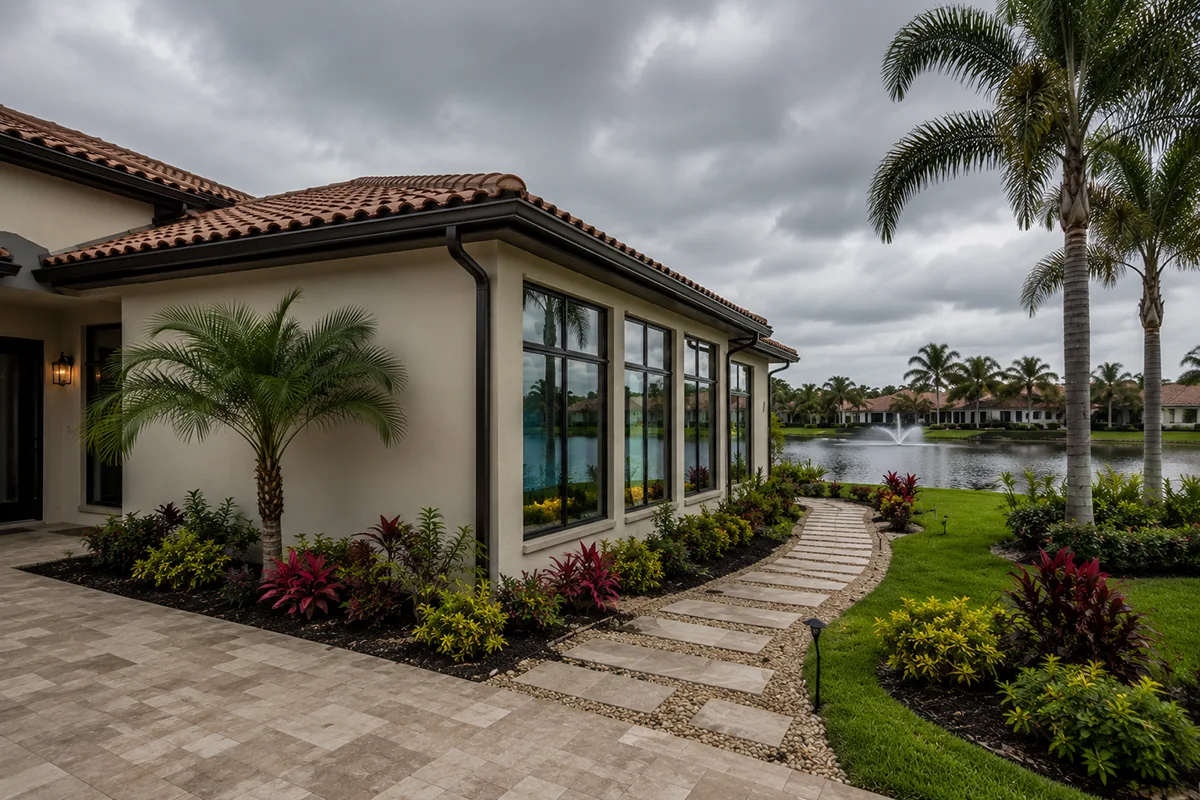
We’re now in the thick of it. Hurricane season runs June through November, but the numbers don’t lie — the vast majority of Atlantic storm activity happens in August, September, and October. If you’ve been feeling relaxed about this season so far, you’re not imagining things: it really has been quiet. But quiet starts don’t mean quiet finishes, and the calm we’ve seen through July is exactly the kind of stretch that tends to breed complacency right before things pick up.
So before the season’s busiest weeks arrive, it’s worth pausing on a question a lot of Treasure Coast homebuyers don’t think about until it’s too late: does the home you’re buying, or planning to buy, actually meet today’s storm standards — or was it built for a different era of code entirely?
A Quiet Start Isn’t a Guarantee
Forecasters have pointed to broader atmospheric patterns keeping storm formation suppressed this year, and long-range outlooks have trended toward a lighter season overall. That’s genuinely good news. But every hurricane season, no matter how the numbers shake out, comes down to the same simple risk: it only takes one storm finding your address to make it a bad year. Treasure Coast homeowners have seen that play out before, and the second half of the season — historically the more active half — is just getting started.
What “Storm-Ready” Actually Means
A lot of hurricane prep talk focuses on the days right before a storm — shutters up, gas tank full, water in the fridge. Those things matter, but they’re the last step, not the foundation. The real question is whether a home was built to handle the load in the first place:
- Roof and connections. Is the roof rated for the wind speeds required in the area, with fastening systems — the straps, anchors, and connectors tying roof to walls to foundation — that meet current code rather than whatever standard was in place decades ago?
- Windows and openings. Impact-rated glass and properly braced garage doors aren’t just a comfort feature; a failed garage door is one of the most common ways wind pressure gets inside a home and takes the roof with it.
- Elevation and drainage. For homes near the water or in low-lying areas, finished floor elevation and site drainage often matter as much as the structure itself when storm surge or heavy rain moves through.
- Documentation. Wind mitigation features — roof shape, opening protections, roof-to-wall connections — directly affect insurance premiums, and a home built to current standards typically comes with clear documentation of all of it from day one.
Older homes across the Treasure Coast vary widely on all four of these points, often depending on exactly when they were permitted. That’s a lot of uncertainty to inherit with a purchase.
Building New Right Now Has an Advantage
If you’re in the process of planning or building a custom home this year, this is one area where new construction has a real edge over older homes in the area. Current Florida building codes already bake in much of what older homes lack — stronger fastening systems, impact-rated openings, and elevation requirements that reflect updated storm surge modeling. Building new during hurricane season isn’t just about timing your move-in date; it’s a chance to make these decisions as part of the design process rather than retrofitting them later.
A Simple Mid-Season Gut Check for Anyone Planning a Move
If you’re weighing whether to buy an existing home on the Treasure Coast or build new, this stretch of the season is a good time to ask a few honest questions:
- Do I actually know how an existing home’s roof-to-wall connections, fastening systems, or window protection stack up, or am I assuming they’re fine?
- Was this home built to today’s wind mitigation standards, or to whatever code existed when it went up?
- If I build new instead, how much of this uncertainty simply goes away because the current code already requires it?
A quiet start to the season is a gift of time, not a guarantee of an easy finish, and it’s exactly the kind of moment that makes clear why so many buyers on the Treasure Coast are choosing to build new rather than take on the unknowns of an older home. If you are ready to start planning a custom home in Vero Beach, Sebastian, or Port St. Lucie, Passage Island Construction is here to help. Our team can guide you through the process with a clear plan, local knowledge, and hurricane-resilient construction built in from day one.
Contact Passage Island Construction today to begin planning your custom home on the Treasure Coast.