
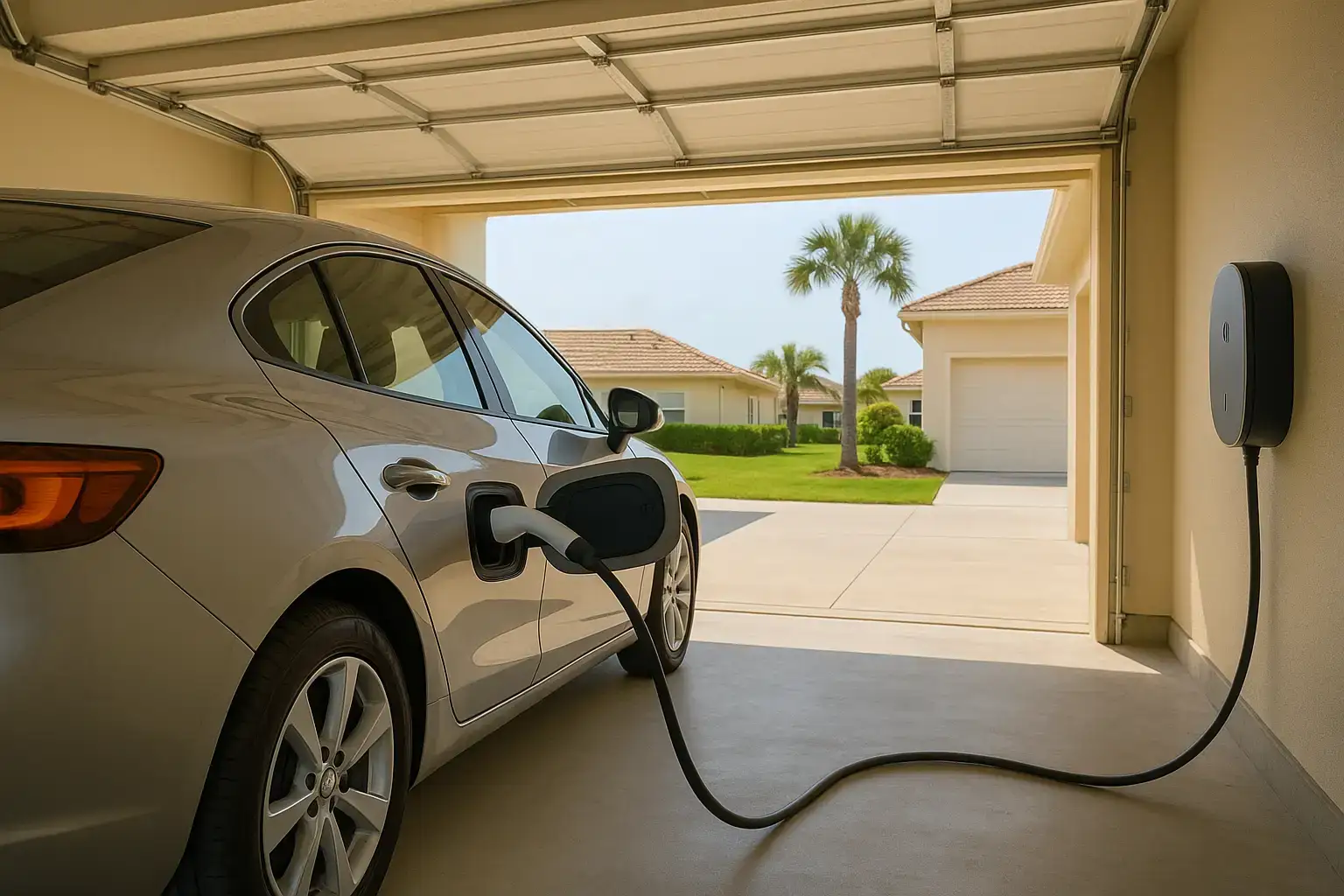
Electric vehicles (EVs) are no longer just a trend—they’re the future of driving. As more homebuyers in Florida switch to electric, charging at home is becoming a must-have feature. At Passage Island Construction, we’re seeing growing interest in EV-ready new homes—and we’re here to make it easy.
If you’re building a custom home in Vero Beach, Sebastian, or another location along the Treasure Coast, planning for an electric vehicle charger is one of the smartest upgrades you can make.
Why Add an EV Charger to Your New Home?
The biggest reason is convenience. Imagine plugging in your car at night and waking up to a full charge in the morning—no gas station stops required. Adding a charger during construction also avoids the need for retrofitting down the line, which can be more costly or complex.
Beyond convenience, installing a home charger can:
- Increase resale value as EV adoption grows
- Appeal to eco-conscious buyers
- Future-proof your garage for years to come
What Are Your Options?
There are three main types of EV chargers, but only two are practical for residential use:
Level 1 Charger
- Uses a standard 120V outlet (the same as a household plug).
- No special installation required.
- Charges very slowly—adds 3–5 miles of range per hour.
- Suitable for plug-in hybrids or very light use.
Level 2 Charger (Most Popular for Homes)
- Uses a 240V outlet (like what powers your dryer).
- Requires professional installation by a licensed electrician.
- Adds 20–40 miles of range per hour.
- Compatible with nearly all EV models.
Level 3 Charger
- Ultra-fast DC charging (mostly found at public stations).
- Not suitable for home use due to cost, power requirements, and infrastructure needs.
Do Car Dealerships Sell the Chargers?
In many cases, yes. Automakers like Tesla, Ford, Rivian, and Hyundai sell Level 2 wall chargers—either bundled with your EV or sold separately. You can also purchase universal chargers from ChargePoint, JuiceBox, or Wallbox.
Some dealerships even offer installation packages, but most homeowners choose their own electrician—or better yet, build a home that’s already set up for it.
Do I Need an Electrician?
Yes. A Level 2 charger requires a 240V circuit, typically installed by a licensed electrician. This is a simple job in a new build—we can pre-wire your garage or install a dedicated outlet during construction.
If your electrical panel has limited capacity, an upgrade may be required. That’s why it’s much easier (and more affordable) to plan for EV charging during the home design phase.
How Passage Island Construction Makes It Easy
When you build with us, we can:
- Pre-wire your garage for future charger installation.
- Include a dedicated 240V outlet as part of your floor plan.
- Coordinate with your preferred electrician or charging system provider.
- Offer layout guidance for garages with golf carts and EVs.
We’re always looking ahead—and helping you build a home that keeps up with how you live.
Ready to Plug Into the Future?
If you’re building a new home and planning to buy an electric vehicle—either now or down the road—this is the perfect time to consider EV readiness. We can incorporate EV charging capabilities right into your custom home design, making it easy to stay ahead of the curve and align with Florida’s energy-conscious lifestyle.
Contact Passage Island Construction to learn how we can build innovative, sustainable features into your brand-new home from the ground up.